Textile Leaders Meet TN Chief Minister to Resolving Power related issues
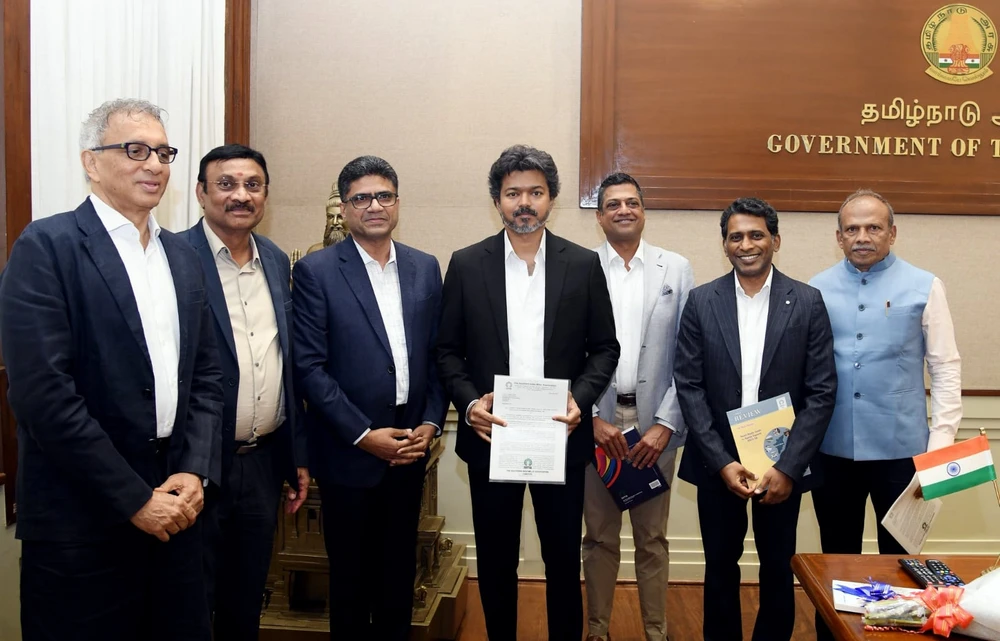 Textile Leaders Meet TN Chief Minister to Resolving Power related issues
Coimbatore (20th May 2026)
In a significant step towards strengthening Tamil Nadu’s position as India’s premier textile manufacturing hub, a high-level delegation from the Southern India Mills’ Association (SIMA) met the Hon’ble Chief Minister of Tamil Nadu today at his office in Chennai. The delegation expressed profound gratitude to the Chief Minister for his proactive intervention in sending a detailed D.O. letter to the Hon’ble Prime Minister, urging the removal of the 11% import duty on cotton—a levy that has severely strained the entire textile value chain by inflating raw material costs and eroding competitiveness against global players like Bangladesh and Vietnam.
SIMA, established in 1933 in Coimbatore and recognized as the single largest employers’ organization in the Indian textile sector, represents mills across South India and plays a pivotal role in fostering industry growth, employment, and exports. The delegation comprised distinguished leaders: Mr. T. Rajkumar, Former Chairman, SIMA; Mr. Ravi Sam, Vice Chairman of the Cotton Textiles Export Promotion Council (TEXPROCIL), Mumbai, and Former Chairman, SIMA; Mr. Ashwin Chandran, Chairman of the Confederation of Indian Textile Industry (CITI), New Delhi, and Former Chairman, SIMA; Mr. S. Krishnakumar, Deputy Chairman, SIMA; Mr. K. Sivaraj, Vice-Chairman, SIMA; and Dr. K. Selvaraju, Secretary General, SIMA.
The meeting provided a comprehensive briefing on the current scenario of the textile industry, with particular emphasis on Tamil Nadu’s contributions and challenges. Tamil Nadu has long held the mantle of numero uno in textile manufacturing, boasting a robust ecosystem spanning spinning, weaving, processing, garmenting, and technical textiles. The sector employs millions, drives substantial exports (with hubs like Tiruppur, Coimbatore, and Karur contributing significantly to the state’s economy), and supports ancillary industries. However, the delegation underscored the urgent need for sustained policy support and proactive initiatives to maintain this leadership amid rising costs, global competition, and recent headwinds such as mill closures—over 300 units have shut down in recent years due to high input costs, including power tariffs.
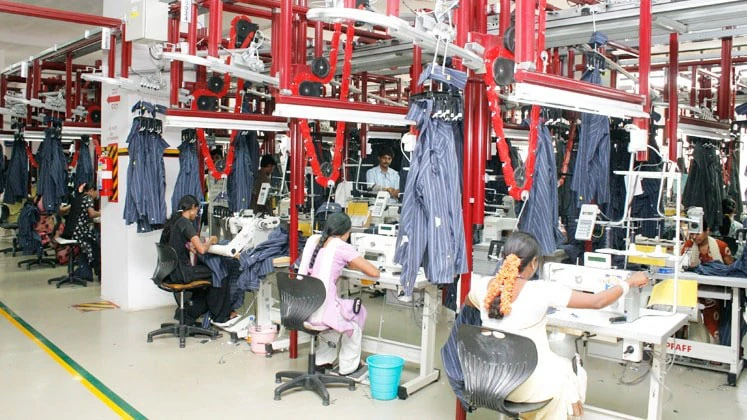 Garment manufacturing unit in Tiruppur
A core focus of the discussions was the steep escalation in power costs, which has become a major impediment to viability, especially for power-intensive spinning and processing units. Tamil Nadu’s industrial power tariffs remain higher than those in competing states, with recent hikes (around 3-3.4% for FY 2026) pushing rates to approximately Rs. 7.5 per unit plus demand charges. Many mills have turned to renewable energy, particularly rooftop solar and wind, to mitigate costs, but policy inconsistencies threaten these investments.
The delegation made specific, immediate appeals to the Hon’ble Chief Minister:
Withdraw the collection of network charges on rooftop solar power generation, in line with the Madras High Court’s orders that have struck down such levies as lacking legal basis and conflicting with renewable energy promotion policies. This would provide much-needed relief to industries that have invested heavily in captive solar to reduce grid dependency.
- Keep in abeyance the collection of arrears related to deemed demand charges until the Appellate Tribunal for Electricity (APTEL) issues a final order, offering interim financial breathing space.
- Freeze demand charges at the current rate of ₹608 per kVA per month for a period of three years to ensure cost predictability and support long-term planning and investment.
Beyond power issues, the delegation urged accelerated implementation of key central and state schemes. They appealed for adequate fund allocation and speedy rollout of the PM MITRA Park Scheme in Virudhunagar—a flagship 1,052-acre greenfield integrated textile park designed to create world-class infrastructure, attract large-scale investments (with recent allotments already unlocking thousands of crores and jobs), reduce logistics costs by housing the full value chain, and boost exports.
They also sought robust support for the Tamil Nadu Integrated Textile Policy (including the updated 2025-26 version), which emphasizes modernization of looms, capital subsidies for processing units, technical textiles, sustainable practices, interest subventions, and infrastructure development to position the state as a global sourcing hub. Additional schemes for skill development, research, and diversification into man-made fibres and technical textiles were highlighted as critical for future growth.
The Chief Minister attentively heard the concerns and assured the delegation of the government’s continued commitment to the textile sector as a cornerstone of Tamil Nadu’s economic progress. This collaborative engagement reflects a shared vision to overcome challenges, enhance competitiveness, retain and create employment, and realize the industry’s full potential in contributing to national exports and the state’s ambitious development goals.
SIMA remains optimistic that swift government action on these fronts will rejuvenate the sector, safeguard livelihoods, and reinforce Tamil Nadu’s leadership in India’s textile landscape.
National Seminar on New Age Fibres held in New Delhi
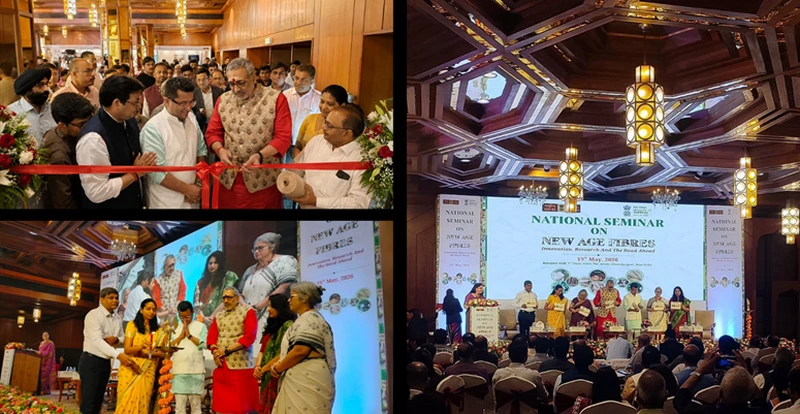 National Seminar on New Age Fibres held in New Delhi
Union Minister of Textiles Shri Giriraj Singh inaugurated the National Seminar on “New Age Fibres – Innovation, Research and the Road Ahead” in New Delhi on May 19, 2026. Organized by the Ministry of Textiles through the National Jute Board, the event convened policymakers, industry leaders, researchers, innovators, startups, and academia to explore the transformative role of sustainable fibres in India’s textile sector. The gathering underscored the government’s commitment to sustainability, innovation, and self-reliance, with the presence of Minister of State for Textiles Shri Pabitra Margherita, Secretary of the Ministry of Textiles Smt. Neelam Shami Rao, and other senior officials.
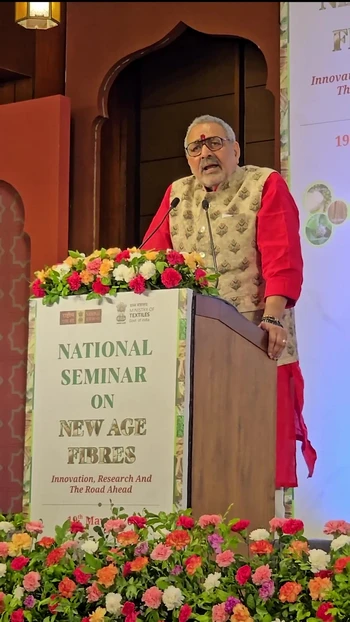 In his address, Shri Giriraj Singh emphasized that new-age fibres are vital for advancing Atmanirbhar Bharat while supporting India’s sustainable development goals. He highlighted their potential to reduce environmental impact, create employment, and diversify agriculture, announcing that regular virtual meetings with stakeholders would ensure ongoing collaboration, progress monitoring, and accelerated ecosystem development. Shri Pabitra Margherita stressed the importance of innovation, skill development, and grassroots entrepreneurship, while Smt. Neelam Shami Rao called for converting seminar insights into concrete policy actions.
The seminar spotlighted promising natural fibres including pineapple, flax, milkweed, bamboo, hemp, nettle, banana, ramie, and kapok. These materials stand out for their eco-friendly, biodegradable, and versatile properties, offering opportunities for rural livelihood generation, value-added manufacturing, and stronger presence in both domestic and global markets. India’s varied agro-climatic conditions position the country well to scale production of these fibres, enhancing farmers’ incomes and promoting circular economy principles in textiles.
The programme began with the inauguration of the New Age Fibres Expo, where the Minister toured stalls displaying innovative products and technologies derived from natural fibres. A ceremonial lamp lighting marked the formal start, and Secretary of the National Jute Board Shri Shashi Bhushan Singh welcomed participants by outlining the fibres’ role in sustainability and global competitiveness. Key highlights included the launch of a dedicated New Age Fibres booklet and detailed reports from three Task Forces, which will provide a roadmap for sector development. Joint Secretary (Fibre) Mrs. Padmini Singla delivered a keynote addressing the domestic and international landscape, noting the global surge in demand for biodegradable textiles.
Thematic sessions delved into critical aspects. The first, on building a foundational framework, featured presentations from Task Forces covering specific fibre categories such as flax, milkweed, and hemp; bamboo, ramie, and sisal; and banana, pineapple, and kapok. Discussions addressed resource availability, cultivation techniques, extraction technologies, supply chain challenges, and the need for better institutional coordination, policy support, standardization, and capacity building. A subsequent session on entrepreneurial models showcased real-world successes in commercializing these fibres, with industry leaders sharing insights on applications in textiles, composites, and specialty products, while emphasizing startups, market linkages, branding, and investment needs.
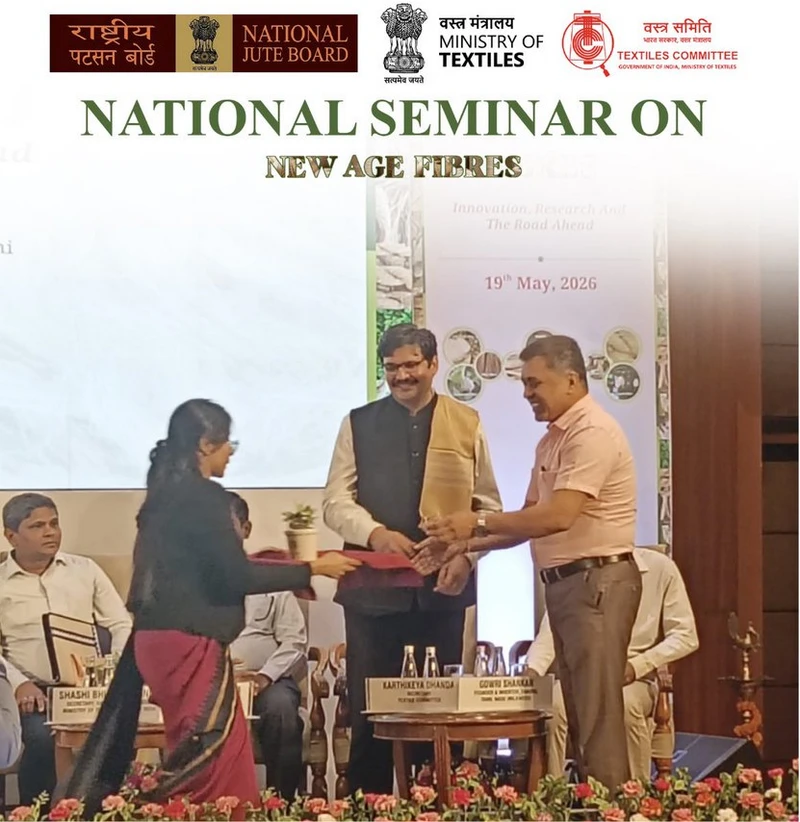 Shri Kartikay Dhanda, Secretary, Textiles Committee
Technical and commercial barriers were tackled in another session, focusing on improving extraction and processing machinery, ensuring quality consistency, strengthening research and development, and developing efficient supply chains through cluster-based approaches and inter-sectoral collaboration between agriculture and textiles. The concluding session outlined a 2030 roadmap, advocating enhanced policy support, inter-ministerial coordination, infrastructure for value addition, standards and certifications for exports, and alignment with international sustainability norms to establish India as a global leader in eco-friendly textiles.
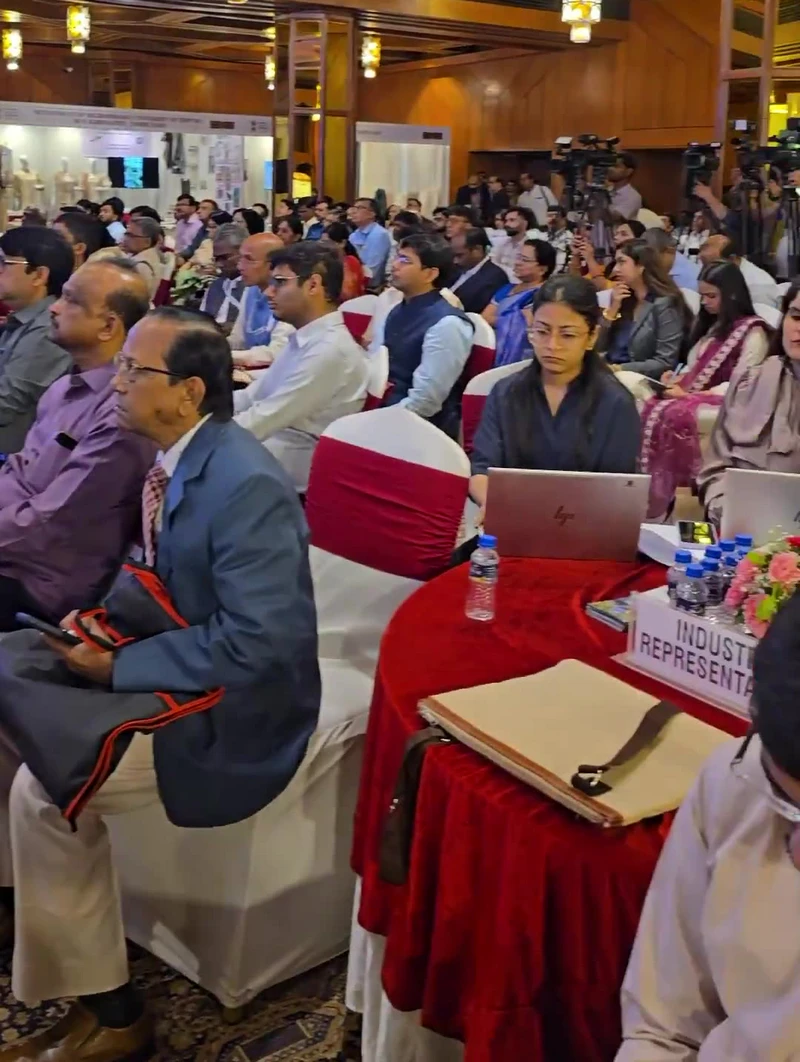
The seminar’s outcomes are set to inform a comprehensive policy framework for new-age fibres. This initiative aligns with broader government efforts to promote sustainable materials, reduce reliance on synthetic fibres, boost rural economies, and strengthen India’s position in the global green economy. By fostering innovation and collaboration across stakeholders, these efforts will contribute meaningfully to environmental goals, employment generation, and the vision of a self-reliant and sustainable textile industry.
Shein–Everlane Deal: A Defining Moment for Future of Fashion
 Shein–Everlane Deal: A Defining Moment for Future of Fashion
The global fashion industry is witnessing what could become one of the most debated acquisitions of the decade. Reports indicate that ultra-fast fashion giant Shein is set to acquire American apparel brand Everlane in a deal valued at approximately US$100 million. While neither company has publicly confirmed the transaction in full detail, multiple media reports suggest that the agreement has been finalized between Shein and Everlane’s majority owner, L Catterton. If completed as reported, the acquisition would represent far more than a conventional corporate takeover—it would symbolize a dramatic convergence between two fundamentally different visions of fashion.
Founded in 2011, Everlane emerged as one of the defining direct-to-consumer fashion success stories of the 2010s. Built around the philosophy of “radical transparency,” the brand sought to distinguish itself from traditional and fast-fashion retailers by openly disclosing factory information, production costs, and sourcing practices. Its minimalist aesthetic, premium basics, and sustainability-driven narrative resonated strongly with millennial consumers seeking ethical alternatives to mass-market apparel. At its peak, Everlane was widely viewed as a model for modern responsible retail and reportedly reached valuations approaching US$600 million.

In stark contrast stands Shein, the Singapore-headquartered fast-fashion powerhouse whose manufacturing and merchandising model has transformed global apparel retail. Shein built its success on ultra-low pricing, data-driven trend detection, and rapid design-to-market cycles capable of introducing thousands of new styles in remarkably short timeframes. The company commands enormous global reach and has reshaped online fashion consumption, particularly among younger consumers. Yet its rise has also been accompanied by persistent criticism over sustainability concerns, labor practices, environmental impact, and intellectual property disputes. These criticisms have made Shein one of the most scrutinized names in global fashion.
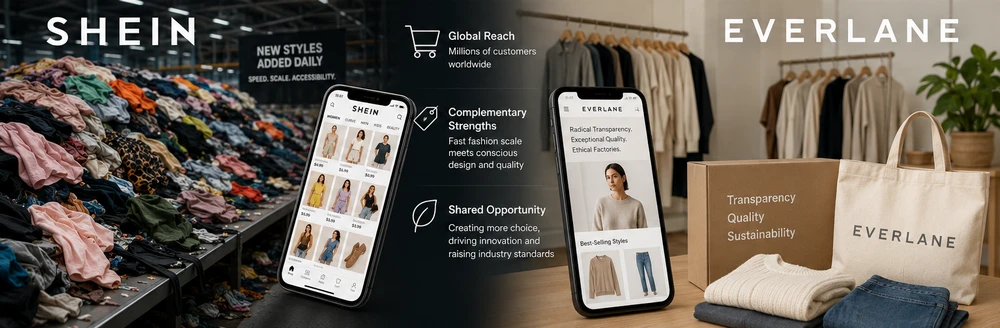
Against this backdrop, the reported acquisition of Everlane has generated immediate debate and strong reactions across the retail and sustainability communities. Many observers view the pairing as deeply paradoxical: a company synonymous with ethical positioning and supply-chain transparency joining forces with a retailer frequently criticized as the embodiment of ultra-fast fashion. The transaction therefore raises profound questions about the commercial realities of sustainable fashion and the increasingly difficult economics facing mission-led apparel brands.
According to reports, the deal values Everlane at roughly US$100 million, a fraction of its earlier valuation and reflective of years of operational and financial pressure. Sources indicate that Everlane had been carrying approximately US$90 million in debt while simultaneously navigating a retail environment marked by slowing e-commerce growth, rising customer acquisition costs, inflationary pressures, and shifting consumer purchasing behavior. The brand reportedly struggled to regain momentum following the pandemic-era e-commerce surge and faced intensifying competition from both traditional retailers and lower-priced digital-first challengers.
 Everlane Products
Industry analysts note that Everlane’s trajectory mirrors a broader challenge confronting many direct-to-consumer pioneers born during the digital retail boom. Brands that once thrived by bypassing wholesale channels and leveraging inexpensive digital marketing have increasingly found those advantages eroding. Higher advertising costs, saturated online marketplaces, and changing consumer expectations have placed pressure on profitability. Several once-celebrated consumer brands have faced restructuring, strategic pivots, or asset sales, illustrating how dramatically the retail landscape has evolved over the past decade.
For Shein, the reported acquisition appears strategically aligned with a broader effort to diversify beyond pure ultra-fast fashion and strengthen its positioning in Western markets. Analysts suggest the move could provide Shein with access to a more affluent consumer demographic, a respected design identity, and an established premium basics category without the time and expense required to build such capabilities organically. Everlane’s customer base, brand recognition, and sustainability narrative may also offer Shein additional credibility at a time when regulatory and reputational pressures are intensifying globally.
The timing is particularly notable. Shein’s operating environment has become more complex due to shifting trade policies and mounting scrutiny of cross-border e-commerce models. Changes affecting duty-free import mechanisms and heightened political attention toward Chinese-linked online retail platforms have created new challenges for companies dependent on low-cost international logistics. In this environment, expanding into higher-value brands and diversified revenue streams may represent a strategic hedge against future disruption.
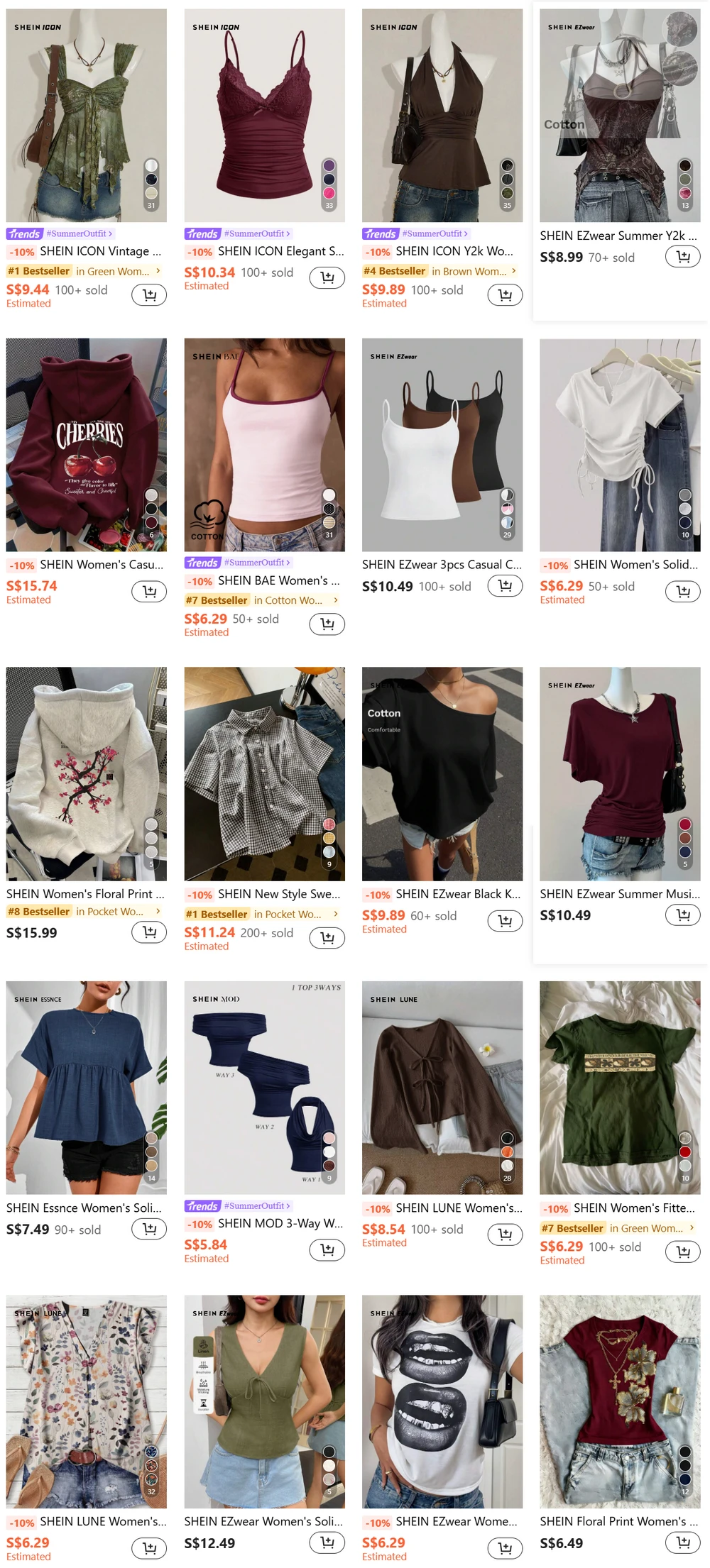 Screenshot of Products for Sale on Shein Website
Yet perhaps the most compelling aspect of the reported acquisition lies not in the financial transaction itself, but in what it reveals about the evolving relationship between consumer values and purchasing behavior. Everlane’s rise was fueled by the belief that transparency, responsible sourcing, and sustainability could form the foundation of a commercially durable fashion business. Its reported sale to Shein has therefore become, for many observers, a symbolic moment—evidence of how difficult it has become for values-driven brands to compete against the scale, speed, and pricing power of global fast-fashion ecosystems.
Critics fear the acquisition could amount to little more than reputational arbitrage or “greenwashing,” allowing Shein to borrow credibility from Everlane’s ethical image while leaving broader business practices unchanged. Others argue that such assessments may be premature. Some industry voices contend that integration with a supply-chain giant could potentially allow sustainability-oriented practices to scale more effectively, provided Everlane maintains meaningful operational independence and continues pursuing its environmental and transparency commitments. Whether such coexistence proves feasible remains uncertain and will likely become one of the most closely watched questions in apparel retail.
The acquisition also underscores a larger transformation underway across global fashion. Increasingly, the market is rewarding affordability, convenience, and speed over aspirational ethical narratives. While consumer awareness regarding sustainability has undeniably grown, purchasing decisions continue to be heavily influenced by price sensitivity and economic conditions. This tension between ideals and affordability has become a defining feature of contemporary retail and may explain why even brands built on strong values propositions struggle to sustain long-term growth without achieving substantial scale or differentiated economics.
For the fashion industry, the Shein–Everlane story may ultimately be remembered as more than a merger headline. It may come to represent a broader reckoning for the sustainability movement itself. The transaction forces difficult but necessary questions: Can ethical fashion survive within a marketplace dominated by speed and price? Is sustainability most effective as a brand identity, or must it be embedded through regulation, industry-wide standards, and systemic reform? And perhaps most importantly, can two companies with such contrasting philosophies create a future that satisfies both commercial imperatives and growing expectations for responsible production?
Until formal announcements provide greater clarity, many details remain subject to confirmation. Nonetheless, the reported deal has already succeeded in igniting a global conversation—one that extends far beyond corporate ownership and into the very future of fashion.
0 comments