ZERO CARBON- Receives State Funding for Next Generation Fuell-Cell-Technology! Drastically Boosting Efficiency
The Zero Carbon machines convert waste streams to a clean natural gas replacement. The usage for the generated syngas is not limited to electricity generation but has many use cases. The gas can be used to supply heat, distill water, industrial application, and ultra-efficient energy generation.
The State Bank of Saxony (SAB) has recently granted additional funding for test cycles testing the integration of SOFC with Zero Carbon under the management of the renowned Fraunhofer Institute IKTS in Dresden. Similar tests are underway integrating the new SOFC System developed by Germanies Kraftwerk Group. This technology is already in larger-scale production and offers a dramatic cost advantage overall.
INVEST NOW
JOIN THE COMMUNITY OF 84 INVESTORS

ZERO CARBON TEST STAND AT THE TECHNICAL UNIVERSITY IN ZITTAU
Zero Carbon is receiving funding in multiple programs. It is represented in three German Ministry of Economics programs for international Technology cooperation to bring technology to the UK, US, and Malaysia. Current and future grants total about 5 Mil. USD from 2018-2022.
The focus is the treatment of different waste streams, from food waste to Sewage Sludge. Zero Carbon has been successful in receiving grant support to cover most costs of the ambitious R&D pipeline.
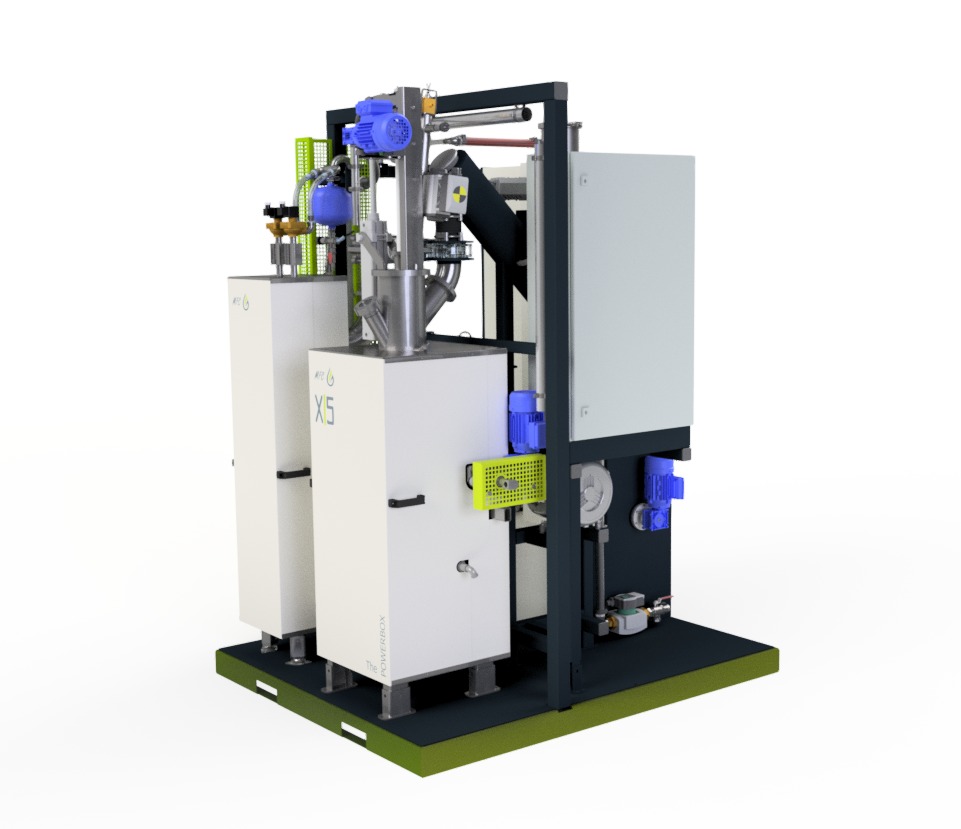
The Zero Carbon machines come in two sizes; the X5 converts 5kg of waste, and the X50 converts 42kg of dry waste hourly. Especially small-scale power generation from waste has been inefficient, as small steam turbines by definition are very inefficient. Most gasifiers use diesel Generators to generate efficiency from 5 to at least 23-24%. The ultimate challenge is converting the syngas via a new kind of Solid Oxide SOFC ("SOFC"), which reaches an efficiency of over 50% while eliminating the need for oil changes and maintenance. Also, the system is quiet, which is a vast improvement over the roaring generator sets currently in use.
SOFC uses a direct chemical process to convert gas to electricity. For example, most applications today use hydrogen, making it the technology of choice for the green hydrogen infrastructure. Fuel Cells' efficiency based on stacks remains the same from fuel cells powering laptops to space stations to industrial applications.

THE SMALLEST FUELL-CELL BASED WASTE TO ENERGY SYSTEM IN THE WORLD- THE ZERO CARBON X5
The Next Generation, Fuel Cell developments, start converting gases other than hydrogen, butane, and propane. Gases consist mainly of Carbon monoxide, hydrogen, methane, and nitrogen, and unconverted complex carbon structures generally summed up as tar. This allows for the direct usage of the syngas for maximum efficiency power generation without the need for expensive and technically challenging gas cleaning and reforming. It offers a way forward to building highly efficient low noise direct conversion systems at a competitive price and a realistic skill level for business and industry operations.
Integrating SOFC at the end of the Zero Carbon reactors will amplify energy generation, develop a continuous, robust chain, and eventually create self-sufficient communities. The mechanism is a breakthrough technology; a simple, portable reactor can resolve persistent waste problems, as it supplies large amounts of energy to households - both are regardless of the location. Currently, EX Zero Carbon leads the market entrance and commercialization through the crowdfunding of the Zero Carbon reactors.
The testing will be done at the Technical University in Zittau under the Fraunhofer IKTS' Dresden; EX Zero Carbon will provide the gasification and drying unit represented by the engineering team MFC, who built Zero Carbon reactors.

SOFC by FRAUNHOFER IKTS IN DRESDEN
Fraunhofer IKTS has over 20 years of experience in sustainable materials research. The result of these tests will mark the reliability of the integration. Previously, EX Zero Carbon reactors themselves have also undergone more than 30 university tests in Germany's Zittau Görlitz University of Applied Sciences. The study by the university concludes the viability and stability of the X5 reactor and the clean gas usability. The reactors have successfully resolved the common problem of clinker and mineral removal and monitored the quality of gas produced. Other than the dangerous elements mentioned above, Zero Carbon's gas is free from chlorine and sulfur, which are the two elements that can ruin fuel cell stack. The commercial pilot of the X5 reactor landed in Bali's Udayana University earlier in 2021.
The integration's ultimate goal is to combine electricity and cooling applications in many parts of the world, especially developing countries. The reactor investigates and resolves technical challenges of converting solid waste into clean, synthetic gas and powers fuel cell operation to amplify energy generation. This integration envisions a quiet and clean home energy unit into the market, with double the efficiency, reduced nitrogen oxide emission, at a meager cost.
INVEST NOW IN ZERO CARBON
Testing the waters legal disclosure.
We are 'testing the waters' to gauge investor interest in an offering under Regulation Crowdfunding. No money or other consideration is being solicited. If sent, it will not be accepted. No offer to buy securities will be accepted. No part of the purchase price will be received until a Form C is filed and only through Wefunder’s platform. Any indication of interest involves no obligation or commitment of any kind.
0 comments