Why Efficiency Beyond Replacement is Key to the Renewable Energy Shift
Jun 25, 2024 7:00 am

Why Efficiency Beyond Replacement is Key to the Renewable Energy Shift
2 min read

The fight against climate change hinges on a crucial shift: moving away from fossil fuels and embracing renewable energy sources. But a new perspective is emerging, one that challenges the notion of complete replacement. This perspective argues that the key to a successful transition lies not just in adopting renewables, but also in tackling inefficiency within our current energy system.
Imagine a map, but instead of locations, it tracks the journey of energy. This is the concept behind a Sankey diagram, a tool used to visualize energy flow. The video breaks this flow into four stages:
- Primary Energy: This is where the journey begins, with sources like coal, oil, wind, or sunlight.
- Secondary Energy: Here, the raw energy is transformed for easier transport and use. For example, coal is converted into electricity at a power plant.
- Final Energy: This stage delivers the energy to the end user, whether it's electricity reaching your home or gasoline delivered to a gas station.
- Useful Energy: This is the golden nugget – the energy we actually use to power our homes, run our appliances, or propel our vehicles.
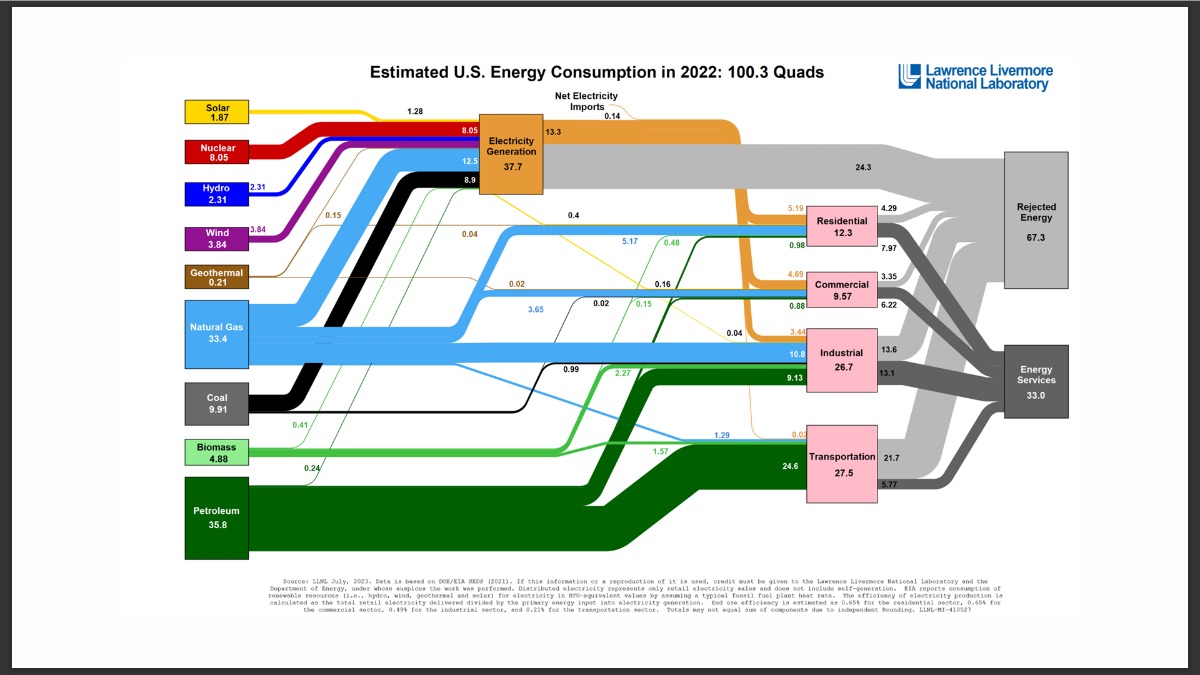
The above chart shows that out of the total energy produced, the US only uses about 1/3. The rest is unused and goes to waste. And it’s not just the US, this chart holds true for almost every country in the world. The problem lies in the vast amount of energy lost between stages. Burning fossil fuels in power plants generates a significant amount of waste heat, escaping into the environment. Similarly, traditional gas stoves and gasoline-powered cars lose a substantial amount of energy during operation.
This inefficiency is what we should target first. By focusing on reducing energy wasted or lost, we can significantly decrease the amount of renewable energy needed to replace fossil fuels altogether.
The solution? Electrification. Switching to electric appliances and vehicles would eliminate the energy lost during combustion in gas-powered counterparts. This would dramatically improve efficiency and significantly reduce our overall energy needs.
I will leave you with this powerful message: transitioning away from fossil fuels isn't just about replacing them, it's about optimising what we already have. By focusing on efficiency and electrification, we can create a more achievable path towards a clean energy future.
This approach offers a valuable perspective. While developing renewable energy sources is crucial, tackling inefficiency within the existing system presents a quicker and potentially more impactful strategy. It's a two-pronged attack on climate change, reducing our reliance on fossil fuels while simultaneously getting the most out of the energy we consume.
Do you think that efficiency is the solution to having more energy sustainably around the globe? Share your thoughts by replying to this email!
For more information on energy efficiency, or any other energy related articles, view the blog posts on my website and be sure to open my weekly emails every Tuesday at 9AM CAT.
Interesting Updates