
Dear Friend,
May has been a month of quiet rest. The book is moving towards production, Batch 3 of the Diploma begins on June 14, and the nature of the season has settled into long writing mornings and slower afternoons spent with charts and correspondence. There is a particular kind of attention that this time of year asks for, and I have been trying to give it.
I find myself thinking often about what we are willing to work for. Some efforts compound over years and only later reveal what they were building towards. Others announce themselves loudly and dissolve just as quickly. The chapter from Epictetus that I have written about below sits inside this question, and I have been carrying it with me through the week as I have been preparing this letter.
If you have been considering joining the Diploma, Batch 3 is the cohort I will be teaching through the summer and into next year. Details are at the end of this letter. If you would rather sit with the transits or the philosophical reflection, those follow as well. Whichever of these you came for, I am glad you are here.
You can download the monthly astrology calendar for June 2026 here.
Inward Glance
Epictetus' Discourses: A Retelling
Book I, Chapter 11, 1.11.11 to 1.11.20
When we lose money or health, we notice it immediately. The loss is visible and painful. But when we lose clarity of mind, when we become confused about what is good and bad, we often do not even realise it. That is a far greater loss, yet it goes unnoticed. He asks us to compare two things. How seriously would we take going blind? Now compare that to how casually we accept being mentally blind, unable to distinguish what truly matters. When seen this way, our priorities begin to look quite misplaced.
At this point, we might say that this kind of understanding requires a lot of effort and study. Epictetus does not deny it. He simply asks, what of it? Anything worthwhile demands effort. No great skill is acquired overnight and this is not the first time Epictetus is implying the thought. The strange thing is that philosophy itself appears simple at first. Its core teachings can be stated in a few lines. Follow the divine order. Use our impressions correctly. That is all.
But once we begin to take these ideas seriously, questions arise. What does it mean to follow the divine? What exactly is an impression? How does our nature relate to the larger whole? The deeper we go, the more the inquiry expands. What seemed simple feels like it needs real attention and discipline.
He then brings in Epicurus to make a contrast. Epicurus says that the good lies in the body, in pleasure. But Epictetus exposes the weakness in that claim. If the good truly belonged only to the body, why would Epicurus spend so much time thinking, writing, and teaching? Why all this effort to arrive at truth? Clearly, there is something in him that values understanding more than mere physical comfort.
This is the turning point. Even Epicurus, who places the good in the flesh, relies on a higher faculty to make that claim. The mind that examines, questions, and seeks truth is greater than the body it is supposed to serve. So how can the body be the highest good?
Epictetus is not just criticising Epicurus. He is pointing us to see something about ourselves. We already live as if the mind matters more. We care about truth, meaning, and understanding. We struggle, think, and question. That itself shows what we truly value, even if we do not admit it.
So the chapter leaves us with a challenge. If we are willing to work so hard for things that do not truly matter, why hesitate when it comes to understanding what is good, what is bad, and how to live well?
Astrological Commentary
Saturn in Revati
Before leaving for my trip to the mountains, I invoked Pūṣan in my fire ritual, asking for a safer path on the journey ahead. As I joined one of Meghna Bhagat's Vision to Form classes, Saturn entered Revati. It felt like a literal manifestation in many ways, because Revati is associated with Pūṣan, the deity of journeys. Pūṣan guides movement with wisdom and protection, not merely ensuring that we move, but that we move well.
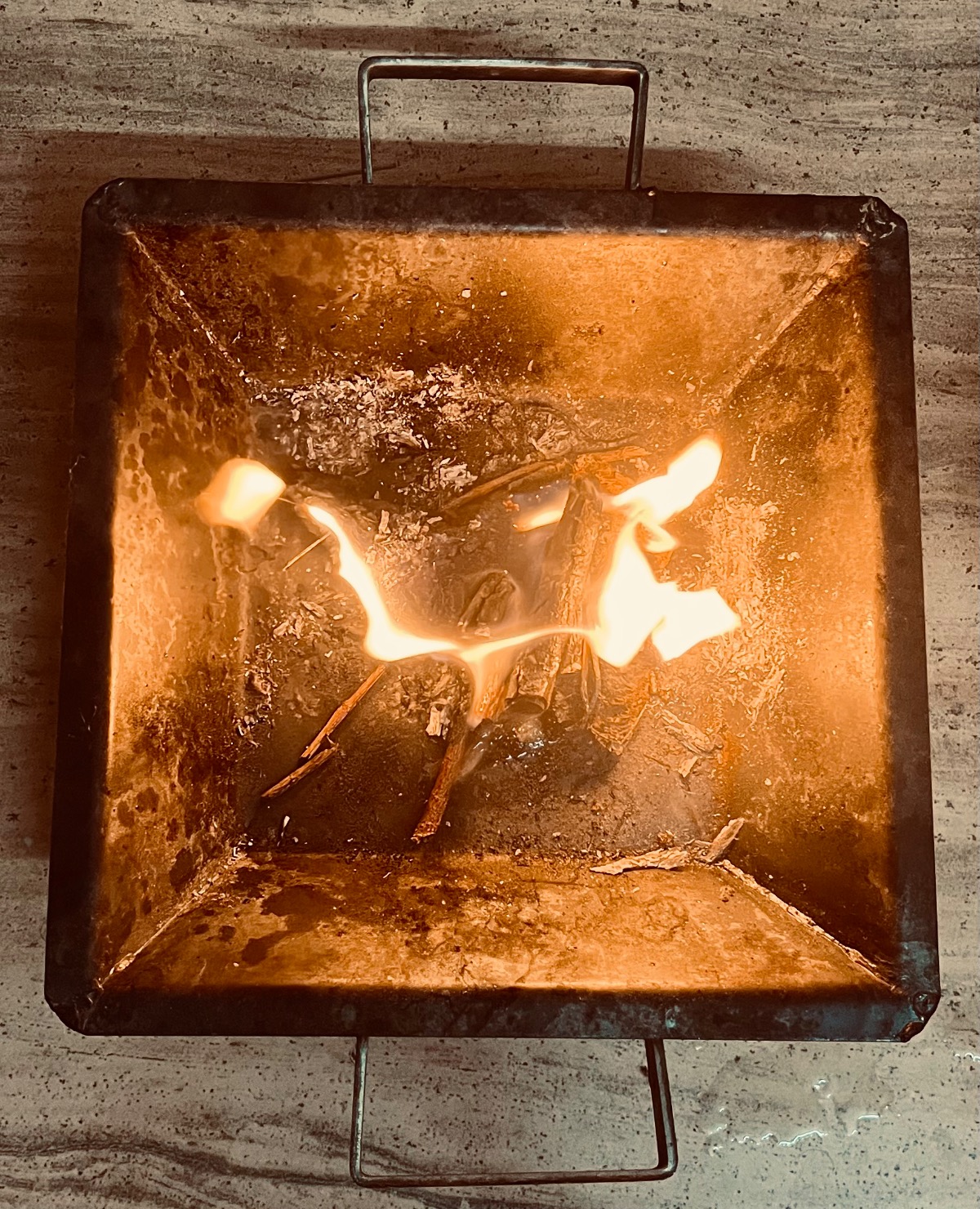
Ṛgveda 1.42 is dedicated to Pūṣan and speaks to its role in maintaining order through guidance. Pūṣan does not simply indicate safe passage but indicates a path that is guided, shortened, and made feasible for the moment we are in. From Pūṣan, we do not ask for strength or victory. We ask for the removal of hindrances, for the clearing of what should not be on our path, and for a certain economy in movement. "Shorten our ways" is a profound idea. It implies that the difficulty is not always the distance, but the unnecessary wandering that comes from obscurity. A path that could be simple becomes long when it is not seen clearly. Pūṣan restores directness.
There is another layer in those verses. The request to "drive away the wolf" points to something that lurks within the path itself, something misaligned that delays, distracts, or even harms the traveller. This is not always external. At times, it is our own misjudgement, fatigue, or lack of clarity that acts as that presence. Pūṣan, therefore, is not only a guide but also a discerner of what belongs to the path and what does not.
Saturn, by its nature, does not shorten anything. It lengthens, delays, and stretches experience across time. In Pisces, where it holds no dignity, this can translate into a certain ambiguity in perception. The realities around us may feel as though they are dissolving, even as we are required to construct new frameworks of meaning. There can be effort, but without immediate clarity. Movement, but without certainty of direction. Saturn here demands attention, discipline, and progress, but often without giving us a clear visual map.
This is where Saturn's entry into Revati becomes significant. The presence of Pūṣan does not cancel Saturn's nature. It refines it. The delays of Saturn begin to find direction. The effort begins to align with a path that feels more coherent. It is not that everything suddenly becomes fast, but that it becomes purposeful. The sense of wandering begins to reduce. What was previously obscured starts to reveal itself, not all at once, but enough for the next step to be taken with greater confidence.
The blessing of Saturn in Revati is not ease, but alignment. Endurance meets direction. The journey may still be long, but it is no longer unnecessarily so. There is a sense that something is walking ahead, clearing just enough of the path for us to continue.
And perhaps that is the deeper promise here. Not that the road disappears, but that it becomes the right road.
Joining the Diploma
Batch 3 of the one-year Diploma in Indian Astrology begins on June 14. The programme covers the foundations of Jyotiṣa, the tools and techniques that follow from those foundations, and the practice of reading charts with care and integrity. It is APAI-accredited, and graduates are eligible for professional membership.
I teach the programme myself, without intermediaries. Students have access to me directly throughout the year, including weekly one-to-one slots that are part of the programme rather than an upsell. The current cohort spans nearly every continent, which has made the discussion in class richer than I had expected.
If this is something you have been considering, the page below has the curriculum, the fee structure, and the practical details. If you have questions before enrolling, you can write to me directly and I will reply.
I will also be available for consultations through the summer. The booking calendar for June 2026 is now open. If you have been considering a reading, I look forward to working with you.
Until Next Letter,
Love,
0 comments