How is your May coming along, ?
I have just turned in the manuscript with my developmental edits for The Domestic Diplomat, the second in my upcoming Regency series. This means that I turned in my manuscript a couple months ago, my editor sent back big-picture notes, I let them percolate in the back of my mind while writing other stories until the deadline was staring me in the face, and then I finally sat down and worked through the whole manuscript again.
I was doing family work all day and up until 3am last night, so I'm a little bit out of cleverness for this newsletter, But the good news is....
- My edits are in! It's done! (For now... we'll have two rounds of line edits next month.)
- I'm actually really starting to like this book now. It's finally reading like the vision I had in my head, after so many rounds of re-writes. I can't wait to share it with you!
What's something you've learned from history in your fiction?
A couple weeks ago, I was a guest for a Facebook group and asked this question. I loved the answers!
I have learned approximately two entire degrees' worth of history in my fiction 😉 and that's before I start writing it. Even in a period that I have studied my entire life (like early modern England and Ireland), I have to research boatloads of new details for every book. What exactly was the requirement if a Protestant and Catholic wanted to marry? (The answer, btw, is "paperwork." They liked their paperwork.) How much did it cost to send a letter?
I thought you would enjoy this too, so as my b0nus for today's (very very sleepy) newsletter, I'm including some of my Author's Notes for The Domestic Diplomat. Scroll down for a few tidbits!
In the actual book, I work hard to include scenery, culture, and historical accuracy—without bogging the story down. This book has a lot of passionate characters trying to get what they want, and some great teenager energy.
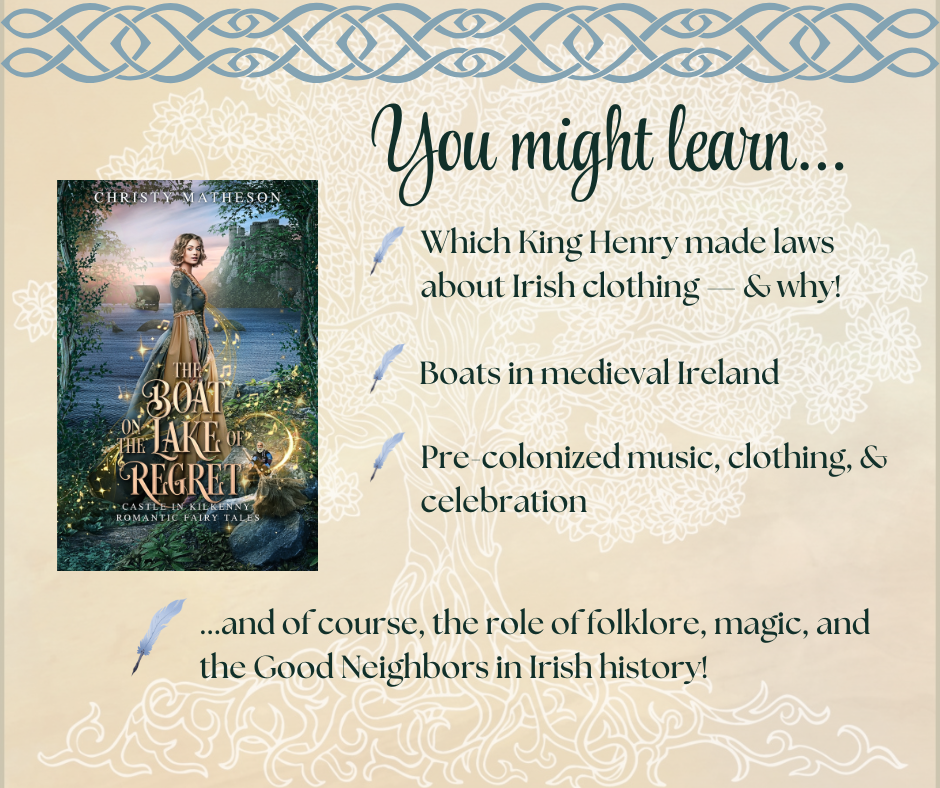
Since The Domestic Diplomat is still a few months away from your hands, I recommend The Boat on the Lake of Regret if you're looking for a book that feels like a light and romantic read, still strongly rooted in place and history.
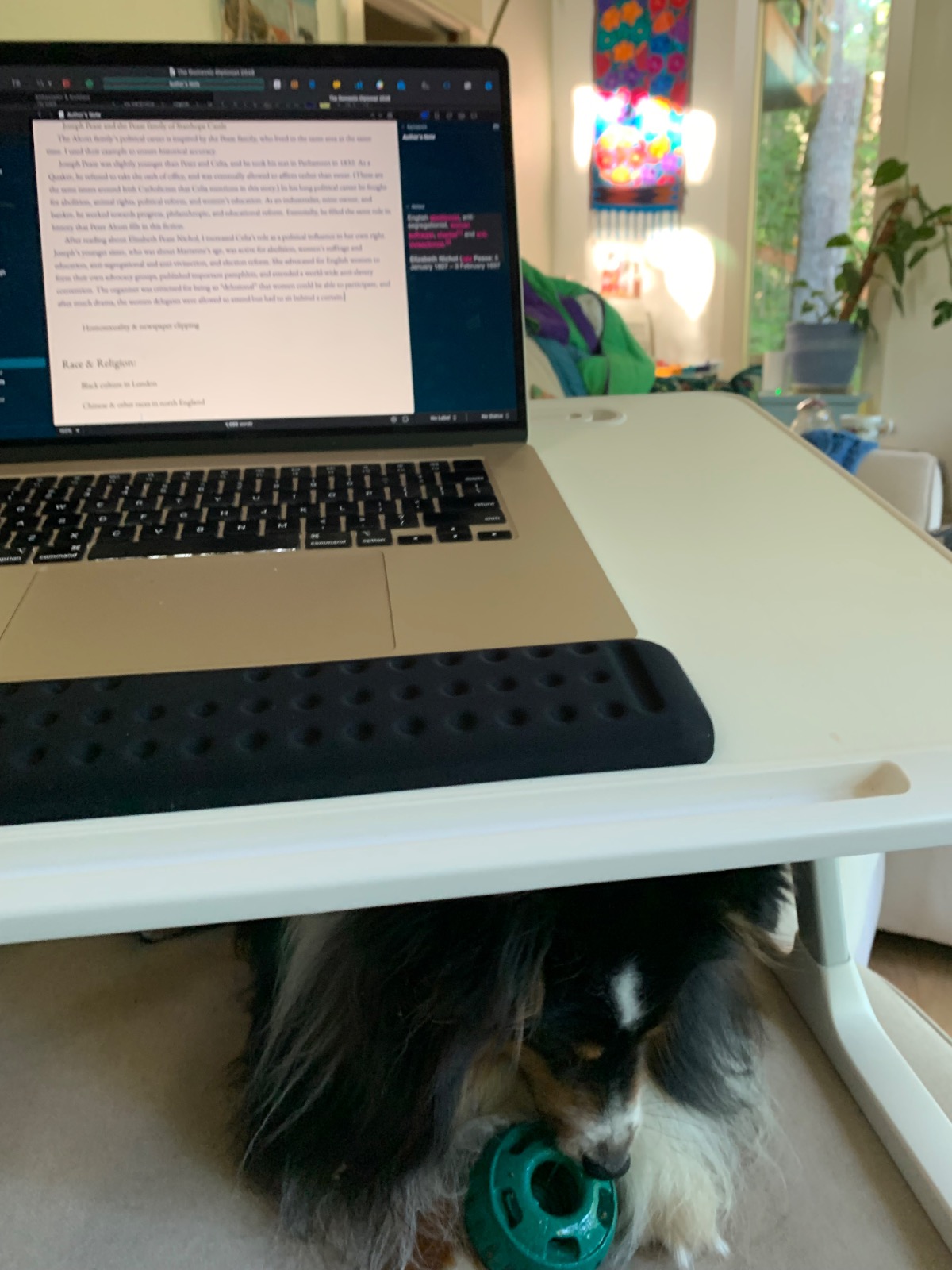
Have you seen my new desk?
I've bought a new lap desk to help with back pain when I'm typing all day. On the retreat last weekend, I had the least pain I ever have had during a writing weekend, so that's a win! Now that I'm home, my desk seems to have acquired a visitor...
Enjoy the tidbits below! And if you're on GoodReads...
Do you want to stop by and follow me? If you've read any of my books, dropping a star rating is quick and easy and helps me a lot—if you haven't, be sure to add to your "want to read" shelf.
Talk to you next week! I'm off to bed...
Christy & the snuggle-monsters
Sampling of Author's notes from The Domestic Diplomat:
Brancepeth Castle
I was honored to take a tour with the current family living in Brancepeth Castle. In the moment of this story, the Russell family was spending L80,000 per year to renovate the castle, probably in hopes they would be granted a title. I set Celia’s painting scene in a real tower room, and the unique form of the beck around it plays a role in the plot.
Political topics
Every political topic in this book came to a vote in Parliament during the 1820’s and early 1830’s, meaning they were under discussion in the time period in this book. Religious freedom (especially concerning Catholics), workers’ rights, women’s education and the vote for women, and Britain’s role in abolishing slavery world-wide were all hotly debated.
Joseph Pease and the Pease family of Stanhope Castle
The Alcott family’s political career is inspired by the Pease family, who lived in the same area at the same time. I used their example to ensure historical accuracy.
Joseph Pease was slightly younger than Peter and Celia, and he took his seat in Parliament in 1832. As a Quaker, he refused to take the oath of office, and was eventually allowed to affirm rather than swear. (These are the same issues around Irish Catholicism that Celia mentions in this story.) In his long political career he fought for abolition, animal rights, political reform, and women’s education. As an industrialist, mine owner, and banker, he worked towards progress, philanthropic, and educational reform. Essentially, he filled the same role in history that Peter Alcott fills in this fiction.
After reading about Elizabeth Pease Nichol, I increased Celia’s role as a political influence in her own right. Joseph’s younger sister, who was about Marianne’s age, was active for abolition, women’s suffrage and education, anti-segregational and anti-vivisection, and election reform. She advocated for English women to form their own advocacy groups, published important pamphlets, and attended a world-wide anti-slavery convention. The organizer was criticized for being so “delusional” that women could be able to participate, and after much drama, the women delegates were allowed to attend but had to sit behind a curtain.
We will have to see what Celia does in the coming years!
Chinese & other races in north England
There were several international ports in northern England. Since the law required British ships to leave with a certain percentage of British sailors, ships were constantly trading international crew. We know that there were many routes serving China, and a growing Chinese community in London. Following the principles of human geography, we can be sure that there were also half-Chinese children in the northern port cities—where we know that prejudice was much stronger.
The Irish in England
Following the establishment of “The Kingdom of Great Britain and Ireland” during the French Revolution, Irish were immigrating to England in larger numbers, where they were met with undisguised hostility. Irish people were viewed as drunken, quick to anger, highly sexual, and stupid. Popular Irish names became slurs, such as insulting someone by calling them “a Paddy.” Like Bridget, people with any Irish background had a difficult time finding professional work even when they were highly qualified.

0 comments